Details
Cost-effective and customizable Prasugrel 150322-43-3 for sale
- Molecular Formula:C20H20FNO3S
- Molecular Weight:373.448
- Appearance/Colour:White solid
- Vapor Pressure:0mmHg at 25°C
- Melting Point:120.0 to 124.0 °C
- Refractive Index:1.619
- Boiling Point:493.5 °C at 760 mmHg
- PKA:3.65±0.20(Predicted)
- Flash Point:252.3 °C
- PSA:74.85000
- Density:1.347 g/cm3
- LogP:3.82890
Prasugrel(Cas 150322-43-3) Usage
|
Mode of action |
Prasugrel is an inhibitor of platelet activation and aggregation through the irreversible binding of its active metabolite to the P2Y12 class of ADP receptors on platelets. |
|
Pharmacodynamics |
Prasugrel is a member of the thienopyridine class of ADP receptor inhibitors, like ticlopidine (trade name Ticlid) and clopidogrel (trade name Plavix). These agents reduce the aggregation ("clumping") of platelets by irreversibly binding to P2Y12 receptors. Compared to clopidogrel, prasugrel inhibits adenosine diphosphate–induced platelet aggregation more rapidly, more consistently, and to a greater extent than do standard and higher doses of clopidogrel in healthy volunteers and in patients with coronary artery disease, including those undergoing PCI. The increased potency of prasugrel appears to be due to more efficient conversion to its active metabolite. However, it carries a higher risk of bleed compared to clopidogrel, which may be a result of its higher potency. Prasugrel produces inhibition of platelet aggregation to 20 μM or 5 μM ADP, as measured by light transmission aggregometry. |
|
Administration and dosage |
Initiate Effient (the brand name of prasugrel) treatment as a single 60 mg oral loading dose and then continue at 10 mg orally once daily. Patients taking Effient should also take aspirin (75 mg to 325 mg) daily. |
|
Metabolism |
Prasugrel is not detected in plasma following oral administration. It is rapidly hydrolyzed in the intestine to thiolactone by human carboxylesterase (hCE) 2. This intermediate is further metabolized to its active metabolite, R-138727, in a single step by cytochrome P450 enzymes in the liver (primarily CYP3A4 and CYP2B6 and to a lesser extent by CYP2C9 and CYP2C19). The active metabolite is further metabolized by S-methylation or cysteine conjugation to two inactive metabolites. Unlike clopidogrel, transformation of prasugrel to its active metabolite does not appear to be affected by cytochrome P450 polymorphisms. |
|
Adverse reaction |
Common adverse reactions include Bleeding, thrombotic Thrombocytopenic Purpura and Hypersensitivity Including Angioedema. In TRITON-TIMI 38, common and other important non-hemorrhagic adverse events were, for Effient and clopidogrel, respectively: severe thrombocytopenia (0.06%, 0.04%), anemia (2.2%, 2.0%), and abnormal hepatic function (0.22%, 0.27%), and allergic reactions (0.36%, 0.36%), and angioedema (0.06%, 0.04%). |
|
Warning and precaution |
CABG-related bleeding: Risk increases in patients receiving Effient who undergo CABG. Discontinuation of Effient: Premature discontinuation increases risk of stent thrombosis, MI, and death. Thrombotic thrombocytopenic purpura (TTP): TTP has been reported with Effient. |
|
Contraindication |
Prasugrel should not be given to patients with active pathological bleeding, such as peptic ulcer or a history of transient ischemic attack or stroke, because of higher risk of stroke (thrombotic stroke and intracranial hemorrhage). |
|
Drug Interaction |
Warfarin Co-administration of Effient and warfarin increases the risk of bleeding.? Non-Steroidal Anti-Inflammatory Drugs Co-administration of Effient and NSAIDs (used chronically) may increase the risk of bleeding. Other Concomitant Medications Effient can be administered with drugs that are inducers or inhibitors of cytochrome P450 enzymes. Effient can be administered with aspirin (75 mg to 325 mg per day), heparin, GPIIb/IIIa inhibitors, statins, digoxin, and drugs that elevate gastric pH, including proton pump inhibitors and H2 blockers. |
|
Side effects |
In addition to the hemorrhagic side effect, other serious adverse events included AF, bradycardia, leucopenia, severe thrombocytopenia, angiodema, anemia, and abnormal hepatic function with hypertension, headache, back pain, dyspnea, nausea, dizziness, and diarrhea as less severe complaints. Prasugrel is contraindicated in patients with active pathological bleeding, such as peptic ulcers or intracranial hemorrhage, and in patients with a history of prior transient ischemic attack or stroke. In addition, in patients 75 years old, <60 kg, or likely to undergo urgent coronary artery bypass graft surgery, the risk may not outweigh the benefit. When possible, prasugrel treatment should be discontinued at least 7 days prior to any surgery. While warfarin and non-steroidal antiinflammatory drugs (NSAIDS) may increase the risk of bleeding with coadministration of prasugrel, no drug interactions are anticipated with concomitant use of drugs that are inducers or inhibitors of the cytochrome P450 enzymes. Prasugrel may also be administered with aspirin (75-325 mg per day), heparin, GP IIb/IIIa inhibitors, statins, digoxin, and drugs that elevate gastric pH, including PPIs and H2 blockers. |
|
Synthesis |
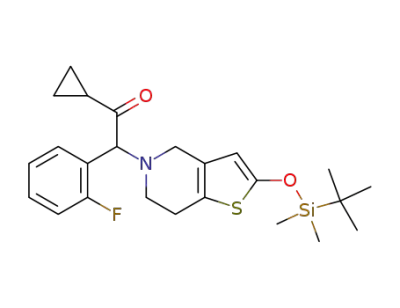
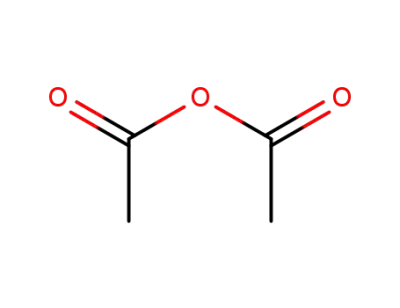
The synthesis of prasugrel begins with the preparation of the a-ketocyclopropane 102 which is prepared as summarized in the scheme. Conversion of 1-(bromomethyl)-2-fluorobenzene (99) to the corresponding Grignard reagent through reaction with magnesium followed by condensation with nitrile 100 resulted in ketone 101 in 72% yield. Chlorination of ketone 101 with CuCl2 resulted in the key prasugrel coupling component 102 in 92% yield. The piperidine coupling partner was prepared by treating thiolactone 103 with TBDMSCl and triethylamine to give thiophene 104 in 91% yield. Treatment of piperidine 104 with a-chloroketone 102 resulted in enol silane 105 in 65% yield. Reaction of silylenol ether 105 with acetic anhydride in the presence of triethylamine and catalytic DMAP resulted in the preparation of prasugrel (XVII) in 60% yield. |
|
Drug interactions |
Potentially hazardous interactions with other drugs Anticoagulants: enhanced anticoagulant effect with coumarins and phenindione. |
|
General Description |
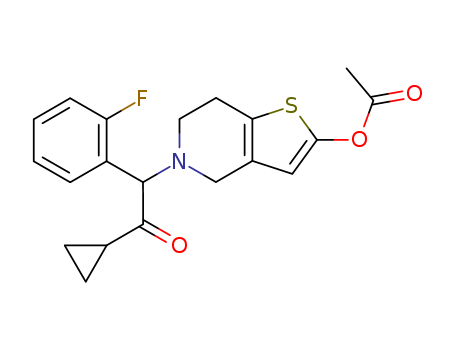
Prasugrel (brand name: “efficient”), a thienopyridine derivative, is a platelet activation and aggregation inhibitor structurally and pharmacologically related to clopidogrel and ticlopidine. Similar to clopidogrel, prasugrel is a prodrug that requires enzymatic transformation in the liver to its active metabolite, R-138727. R-138727 irreversibly binds to P2Y12 type ADP receptors on platelets thus preventing activation of the GPIIb/IIIa receptor complex. As a result, inhibition of ADP-mediated platelet activation and aggregation occurs. Prasugrel was developed by Daiichi Sankyo Co. and is currently marketed in the United States and Canada in cooperation with Eli Lilly and Company for acute coronary syndromes planned for percutaneous coronary intervention (PCI). FDA approved in 2009. Its brand name is “efficient”. Figure 1 Molecular structure of Prasugrel; |
|
Application |
Prasugrel is used in combination with low dose aspirin to prevent thrombosis in patients with acute coronary syndrome (ACS), including unstable angina pectoris, non-ST elevation myocardial infarction (NSTEMI), and ST elevation myocardial infarction (STEMI), who are planned for treatment with percutaneous coronary intervention (PCI). In studies, prasugrel was more effective than the related clopidogrel but also caused more bleeding. Overall mortality was the same. Prasugrel does not change the risk of death when given to people who have had a STEMI or NSTEMI. Prasugrel does however increase the risk of bleeding and may decrease the risk of further cardiovascular problems. Thus routine use in NSTEMI patients is of questionable value. |
|
Brand name |
Effient |
InChI:InChI=1/C20H20FNO3S/c1-12(23)25-18-10-14-11-22(9-8-17(14)26-18)19(20(24)13-6-7-13)15-4-2-3-5-16(15)21/h2-5,10,13,19H,6-9,11H2,1H3
150322-43-3 Relevant articles
A "bunch" method for preparing method for prasugrel
-
Paragraph 0032-0041, (2019/04/04)
The present invention relates to a metho...
A process for the preparation of the new process prasugrel hydrochloride
-
, (2018/09/02)
The invention discloses a novel synthesi...
A high-purity prasugrel preparation method
-
, (2018/07/30)
A high-purity prasugrel preparation meth...
Preparation method of Prasugrel intermediate and prasugrel crude product
-
, (2018/09/08)
The invention relates to a preparation m...
150322-43-3 Process route
-
-
952340-38-4
2-(tert-butyldimethylsilyloxy)-5-(α-cyclopropylformyl-2-fluorobenzyl)-4,5,6,7-tetrahydrothieno[3,2-c]pyridine

-
-
108-24-7
acetic anhydride

-
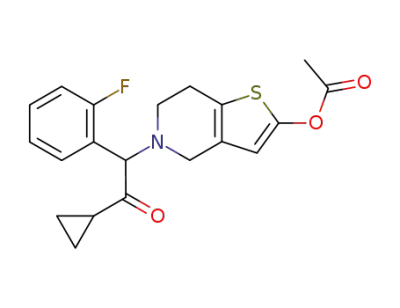
-
150322-43-3
prasugel
| Conditions | Yield |
|---|---|
|
2-(tert-butyldimethylsilyloxy)-5-(α-cyclopropylformyl-2-fluorobenzyl)-4,5,6,7-tetrahydrothieno[3,2-c]pyridine;
With
dmap; triethylamine;
In
acetone;
at 0 ℃;
for 0.166667h;
acetic anhydride;
In
acetone;
Solvent;
Temperature;
|
90% |
|
With
triethylamine;
dmap;
In
acetonitrile;
at -15 ℃;
for 1h;
|
|
|
2-(tert-butyldimethylsilyloxy)-5-(α-cyclopropylformyl-2-fluorobenzyl)-4,5,6,7-tetrahydrothieno[3,2-c]pyridine;
With
dmap; triethylamine;
In
acetonitrile;
at 20 ℃;
for 0.25h;
acetic anhydride;
In
acetonitrile;
at 20 ℃;
|
|
|
With
dmap; triethylamine;
In
acetonitrile;
at 0 ℃;
|
|
|
With
dmap; triethylamine;
In
acetonitrile;
at -4 - -3 ℃;
for 2.25h;
|
-
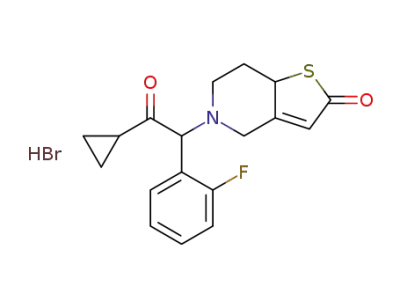
-
1243654-57-0
5-(α-cyclopropylcarbonyl-2-fluorobenzyl)-2-oxo-2,4,5,6,7,7a-hexahydrothieno[3,2-c]pyridine hydrobromide
-
-
108-24-7
acetic anhydride
-
-
150322-43-3
prasugel
| Conditions | Yield |
|---|---|
|
5-(α-cyclopropylcarbonyl-2-fluorobenzyl)-2-oxo-2,4,5,6,7,7a-hexahydrothieno[3,2-c]pyridine hydrobromide;
With
triethylamine;
In
dichloromethane;
at 0 - 5 ℃;
for 0.5h;
acetic anhydride;
In
dichloromethane;
|
73% |
|
5-(α-cyclopropylcarbonyl-2-fluorobenzyl)-2-oxo-2,4,5,6,7,7a-hexahydrothieno[3,2-c]pyridine hydrobromide;
With
triethylamine;
In
dichloromethane;
at 25 - 30 ℃;
for 0.25h;
acetic anhydride;
In
dichloromethane;
at 0 - 5 ℃;
for 6h;
|
|
|
5-(α-cyclopropylcarbonyl-2-fluorobenzyl)-2-oxo-2,4,5,6,7,7a-hexahydrothieno[3,2-c]pyridine hydrobromide;
With
triethylamine;
In
dichloromethane;
at 25 - 30 ℃;
for 0.25h;
acetic anhydride;
In
dichloromethane;
at 0 - 5 ℃;
for 6h;
|
|
|
With
triethylamine;
In
dichloromethane;
at 0 ℃;
for 3.5h;
|
150322-43-3 Upstream products
-
150322-38-6
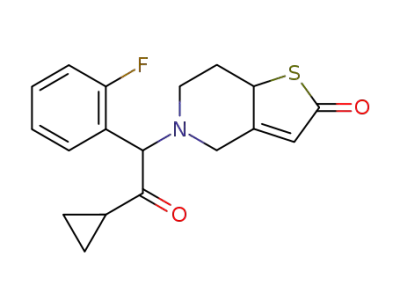
5-(2-cyclopropyl-1-(2-fluorophenyl)-2-oxoethyl)-5,6,7,7a-tetrahydrothieno[3,2-c]pyridin-2(4H)-one
-
952340-38-4
2-(tert-butyldimethylsilyloxy)-5-(α-cyclopropylformyl-2-fluorobenzyl)-4,5,6,7-tetrahydrothieno[3,2-c]pyridine
-
108-24-7
acetic anhydride
-
204205-33-4
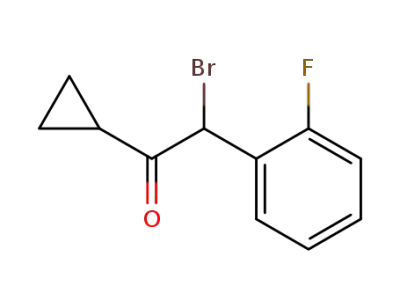
2-bromo-1-cyclopropyl-2-(2-fluorophenyl)ethanone
150322-43-3 Downstream products
-
952340-40-8
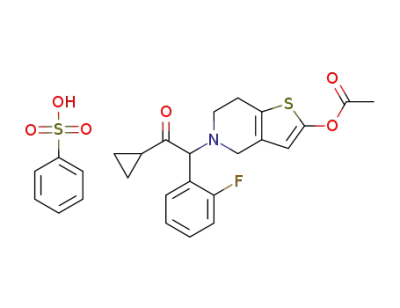
5-[2-cyclopropyl-1-(2-fluorophenyl)-2-oxoethyl]-4,5,6,7-tetrahydrothieno[3,2-c]pyridin-2-yl acetate benzene sulfonate
-
1178975-73-9
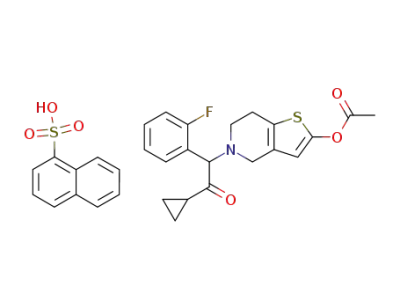
prasugrel 1-naphthalenesulfonic acid salt
-
1191933-01-3
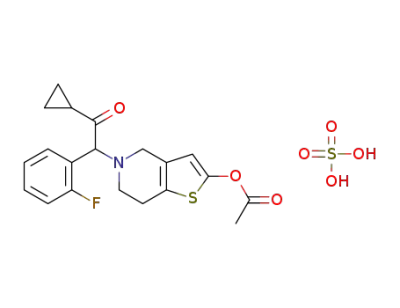
prasugrel monohydrogensulfate
-
1155404-76-4
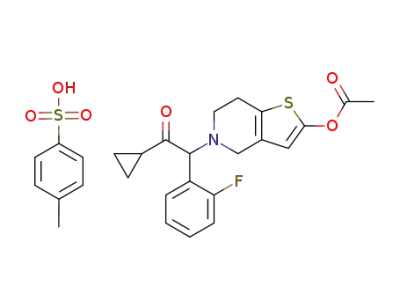
2-acetoxy-5-(α-cyclopropylcarbonyl-2-fluorobenzyl)-4,5,6,7-tetrahydrothieno[3,2-c]pyridine p-toluenesulfonate
Related Products
-
 DL-CAMPHORQUINONE
CAS:10373-78-1
-
 AFLATOXIN B1
CAS:1162-65-8
-